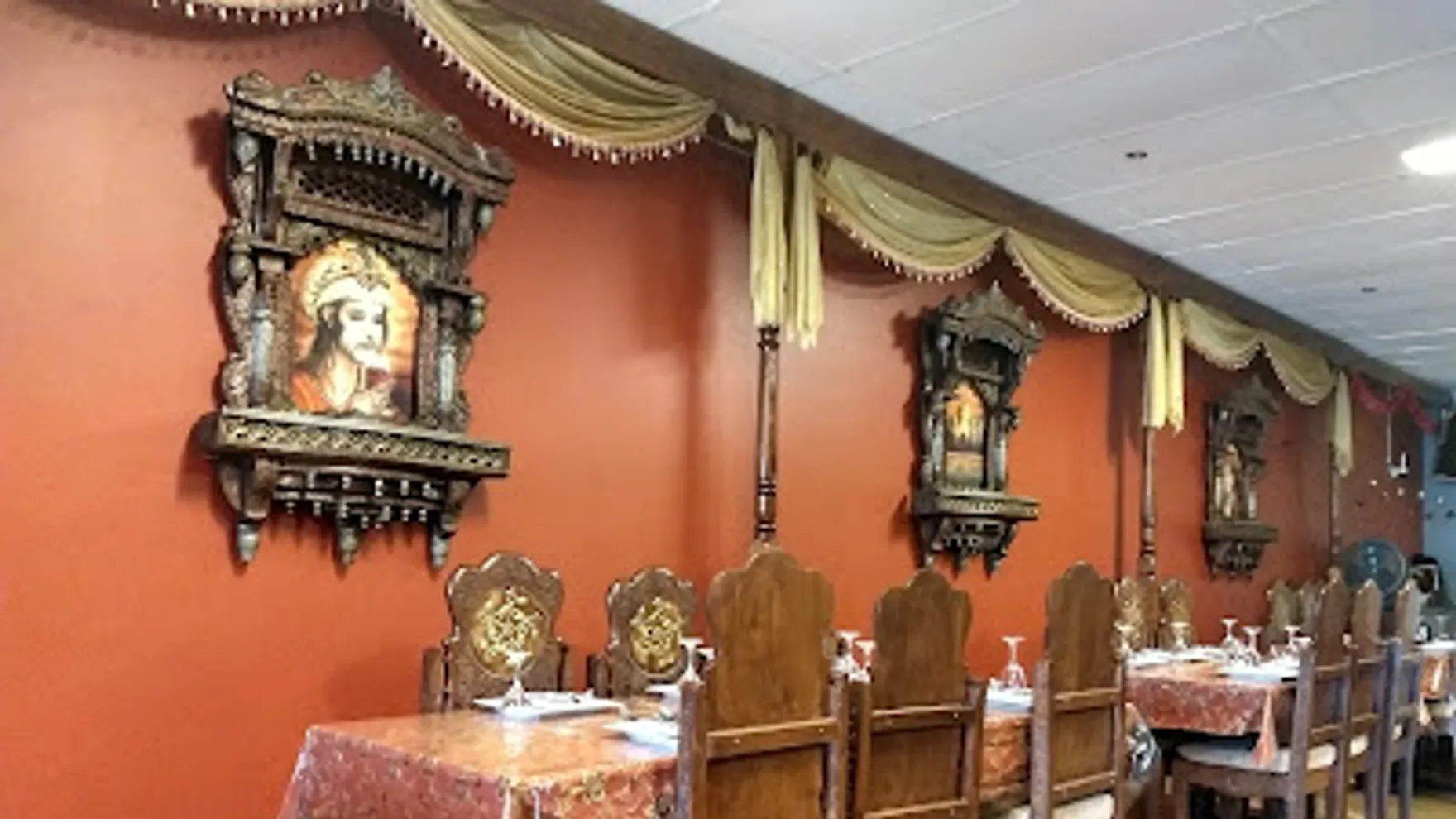
King of Curries
King of Curries is an Indian restaurant.
Per-allergen evidence
King of Curries is an Indian restaurant. It has a very extensive vegetarian section called Sabz-e-Bahar, which includes paneer dishes, dal, vegetable curries, and vegetarian entrees like samosas and pakoras, as well as a 'Vegetarian Platter' and 'Veg Thali'. Vegetarian options are abundant. They are clearly identifiable on the menu, but because the kitchen is shared with meat dishes, strict vegetarians who want to avoid cross-contact should confirm with the staff beforehand.
The menu marks numerous dishes with (GF), including Pappadum, Vegetable Pakora, Onion Bhaji, most main curries, rice dishes, and more. However, this is a shared kitchen where breads like naan and roti, which contain gluten, are baked in the same tandoor. Fried items such as samosas and spring rolls are not labeled GF. There is no dedicated gluten-free kitchen or fryer mentioned. Cross-contamination is a real risk. Coeliac diners should speak directly with staff and consider sticking to the marked GF dishes, especially the rice-based mains.
The menu includes a 'Vegan Options' section. Papadums and Onion Bhaji are listed as vegan upon request. Many other items can be made vegan if guests inform staff, since some contain dairy. The main menu also offers vegetable and pulse dishes such as Dal Fry, Channa Masala, and Mixed Vegetable Curry, along with rice dishes marked GF. These are likely vegan or easy to veganise. However, the kitchen is shared. Staff awareness for vegan preparation is not independently verified. Guests are advised to call ahead to confirm preparation for strict vegans.
Many dishes are marked (GF). However, dairy is not indicated on the menu. The Vegan Options section does note that some items contain dairy and can be made vegan upon request, indicating staff can modify dishes to omit dairy. Many curries use cream, yoghurt, or butter, such as Butter Chicken, Chicken Korma, Dal Makhani, and paneer dishes. The kitchen can accommodate dairy-free requests, but there is no dedicated dairy-free preparation area. Call ahead to confirm.
Prawn dishes are on the menu. The menu features Punjabi Masala Prawns, Prawns Pakora, Prawn Korma, Prawn Malabar, plus other prawn dishes, and a 'Masala Seafood' dish containing calamari, prawns, scallops, and mussels. No shellfish-free guarantee exists, there is no dedicated fryer, and the kitchen is shared. Shellfish-allergic diners should speak directly with staff.
Cashews appear in several dishes: the menu lists cashews in Vegetable Korma, Kaju Gobhi, Paneer Malabar, and Prawn Korma, and nuts in Kashmiri Naan, but it lacks any allergen matrix, nut-free designations, or statements about nut-free preparation or cross-contamination risk. The kitchen is shared and uses nuts in multiple recipes. Diners with nut allergies should speak directly with the kitchen to assess risks.
The menu does not explicitly flag egg content, and naan breads often include eggs in certain Indian recipes, though this is not stated anywhere on the menu. Desserts like Gulab Jamun and Kheer may not contain egg, but ice cream and kulfi might. No egg-free guarantee exists, and no allergen information is available. Diners with an egg allergy should confirm with staff directly.
The menu lists Vegetable Manchurian as cooked in 'soya sauce-based gravy', confirming soy is used in at least one dish. There is no soy-free designation or allergen matrix. The kitchen is shared and no dedicated preparation area is noted. Soy-allergic diners should discuss with staff.
No halal sourcing is confirmed. The menu includes pork-free options typical of Indian cuisine, but also serves beef, lamb, goat, chicken, and prawns without any halal claim or certification anywhere on the official menu or website, and there is no mention of halal slaughter. Diners seeking halal meat should call ahead and confirm sourcing, because based on all available information the venue is not recommended for halal requirements.
Always confirm with venue staff before ordering. Tiers and accreditations are guides, not guarantees.
Read the methodology →